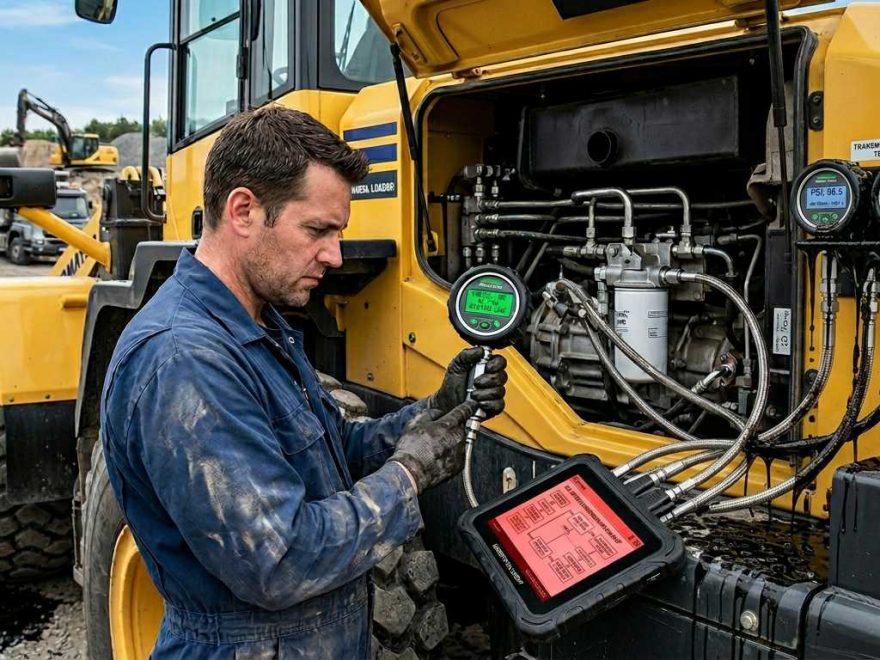
If your wheel loader is experiencing low transmission oil pressure across all gears, it is a critical issue that can lead to sluggish performance, clutch slippage, and eventual mechanical failure. Diagnosing the root cause quickly is essential for minimizing downtime.
Here are the five most common causes of low transmission pressure and how to fix them.
1. Transmission Pump Wear and Internal Leakage
The transmission pump is the heart of the hydraulic system. If the pump experiences severe internal wear, its volumetric efficiency drops, meaning it can no longer maintain the required flow or pressure.
- Symptoms: Pressure remains low regardless of engine RPM or gear selection.
- The Fix: Start by checking all pump connections for air leaks. If the connections are tight, disassemble and inspect the transmission pump for scoring or internal damage. Replace the pump if wear exceeds manufacturer specifications.
2. Faulty Transmission Control Valve or Accumulator
The control valve regulates the flow and pressure to the clutches. Several mechanical failures within this unit can cause a system-wide pressure drop.
- Common Culprits:
- Pressure Regulating Spring: A broken or fatigued spring cannot hold the relief valve closed, allowing oil to bypass the circuit.
- Valve Stem Jamming: Debris can cause the pressure-reducing valve stem to stick.
- Accumulator Piston: A jammed piston prevents the spring from retracting, leading to inconsistent pressure.
- The Fix: Disassemble the transmission control valve. Thoroughly clean all components with solvent, inspect springs for proper tension, and replace any damaged or “sticky” parts.
3. Oil Passage Leaks and Filter Blockages
Hydraulic systems require a clear path and clean fluid to maintain pressure. Obstructions or leaks in the main lines act like a “clogged artery.”
- The Issue: A heavily contaminated oil filter restricts flow, while a leak in the main oil passage prevents pressure from building up.
- The Fix: Perform a visual inspection of the main oil lines. Remove and inspect the transmission oil filter. If you find metallic debris in the filter, it may indicate a larger mechanical failure elsewhere in the transmission.
4. Damaged Control Valve Gaskets
The interface between the transmission control valve and the transmission housing relies on a high-pressure gasket to maintain a seal.
- The Issue: If this gasket is blown, cracked, or improperly seated, oil will leak internally before it reaches the gears.
- The Fix: Remove the control valve assembly and inspect the gasket. Even a small “ping” or tear can cause significant pressure loss. Always use a high-quality OEM replacement gasket to ensure a proper seal.
5. Malfunctioning Transmission Pressure Gauge
Sometimes the problem isn’t the pressure itself, but how it is being measured. A “ghost” reading can lead to unnecessary repairs.
- The Issue: A faulty gauge or a blocked capillary tube can give a false low reading even if the transmission is operating perfectly.
- The Fix: Use a calibrated external “master gauge” to verify the pressure. If the external gauge shows healthy pressure while the dashboard shows low pressure, replace the sender unit or the dashboard gauge.
Pro Maintenance Tip
To prevent low transmission pressure, stick to a strict hydraulic fluid analysis schedule. Changing your filters and oil at the recommended intervals (typically every 500–1000 hours) is the best way to prevent valve jamming and pump wear.
Are you still experiencing transmission issues? Consult your machine’s service manual for specific pressure specifications (usually measured in PSI or MPa) to ensure your loader is operating within factory limits.
Frequently Asked Questions
Why is my loader transmission pressure low in all gears?
This usually indicates a systemic issue such as a failing main pump, a broken pressure regulating spring in the control valve, or a significant blockage in the oil filter and main passage.
How do I test if my transmission pump is failing?
Start by checking for air leaks at the pump connections. If the pressure doesn’t rise with engine RPM, the pump’s volumetric efficiency has likely dropped due to internal wear.
Can a bad gauge cause a low pressure reading?
Yes. If the machine feels like it is shifting normally but the dashboard shows low pressure, use a master gauge to confirm. If the master gauge shows correct pressure, replace the dashboard gauge or sender unit.
What maintenance prevents low transmission pressure?
Stick to a 500–1,000 hour service interval for oil and filter changes. Regular oil analysis can help catch metallic debris early, signaling internal component wear before a total failure occurs.