
Regular maintenance is essential for keeping a Deutz FL513 series diesel engine reliable, efficient, and safe to operate. These air-cooled engines are widely used in commercial vehicles, construction machinery, industrial equipment, and other heavy-duty applications where engine failure can cause costly downtime.
Routine maintenance should never be delayed simply because the engine appears to be operating normally. Wear, fuel-system contamination, incorrect valve clearance, cooling-air restrictions, and small oil leaks can develop gradually without producing an immediate warning.
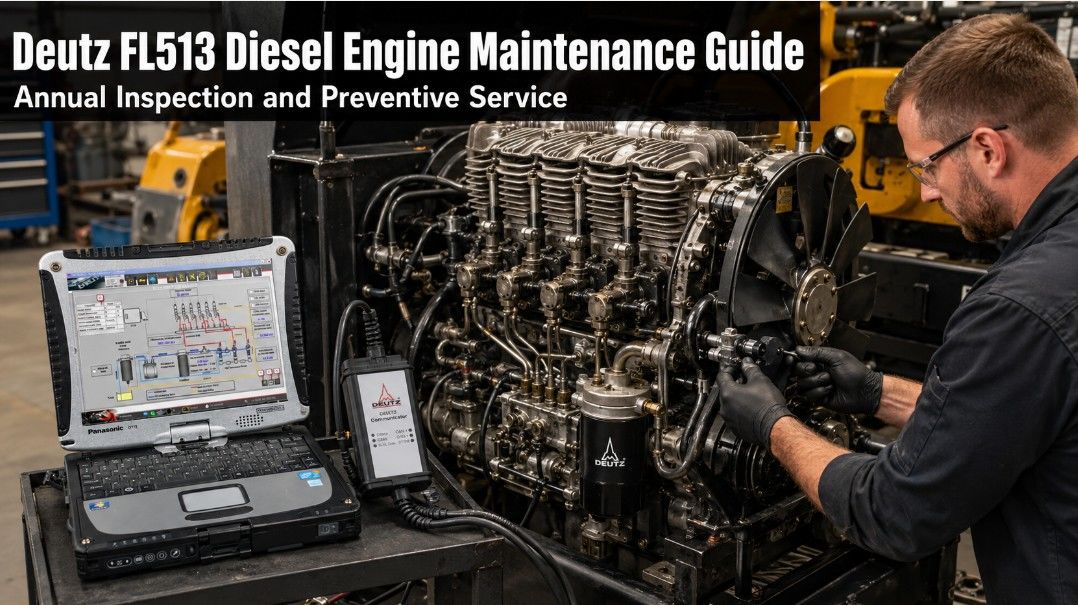
This guide explains the regular maintenance requirements for Deutz FL513 series diesel engines, including injector testing, valve adjustment, turbocharger inspection, fuel injection pump servicing, fan-system maintenance, and annual preventive checks.
Important: Maintenance specifications may vary by engine model, serial number, application, and operating environment. Always confirm the correct procedure and specifications in the official Deutz workshop manual before carrying out repairs or adjustments.
Why Regular Maintenance Is Important for the Deutz FL513
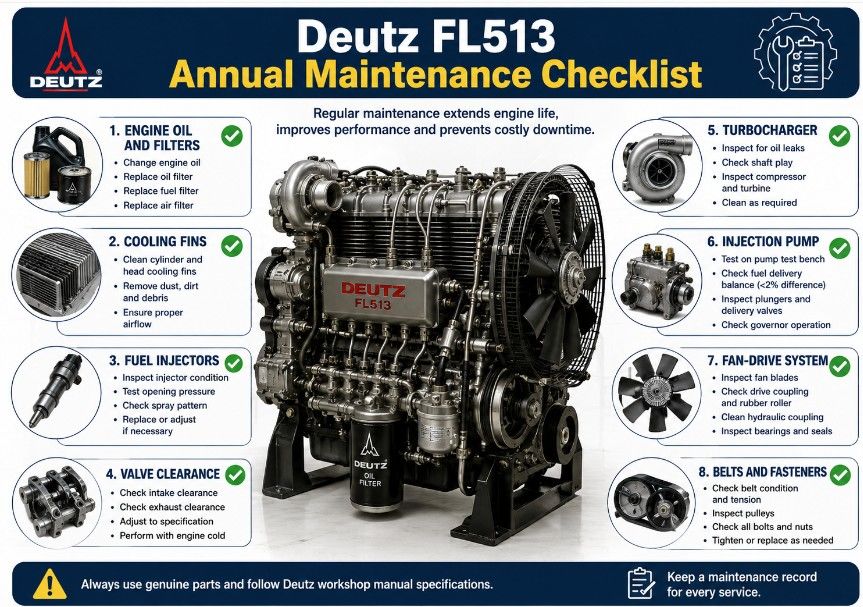
Preventive maintenance helps identify developing faults before they cause serious engine damage. It can also:
- Extend the engine’s service life.
- Reduce unexpected equipment downtime.
- Maintain stable engine power.
- Improve fuel efficiency
- Reduce excessive exhaust smoke.
- Prevent overheating and lubrication problems.
- Protect pistons, cylinder heads, valves, and turbocharger components.
- Improve starting performance
- Reduce long-term repair costs.
Because construction machinery and commercial vehicles often operate in dusty, high-load, or high-temperature conditions, normal daily maintenance may not be sufficient. A comprehensive inspection should therefore be completed at least once every year, even when the engine has not reached the normal hour-based service interval.
Recommended Deutz Diagnostic Equipment
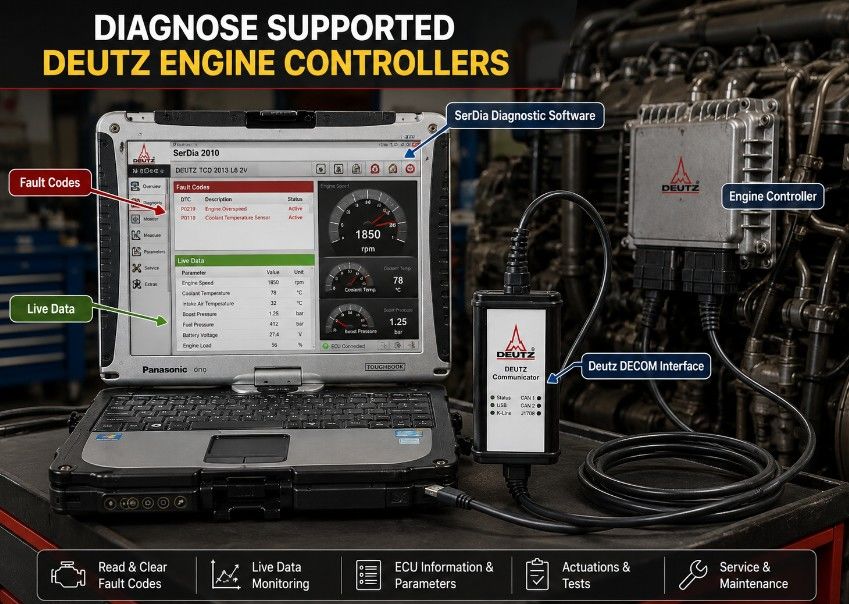
Electronic diagnosis can support mechanical maintenance by helping technicians identify stored faults, monitor operating data, and verify engine-system performance.
Common Deutz diagnostic solutions include:
- Deutz DECOM diagnostic interface
- Deutz SerDia 2010 diagnostic software
- Deutz SerDia 4.0
- Compatible Deutz engine controller communication equipment
Diagnostic software does not replace mechanical inspection. Injector condition, valve clearance, compression pressure, air-cooling efficiency, belt tension, fuel leakage, and turbocharger wear must still be checked physically.
1. Inspect the Exterior of the Diesel Engine
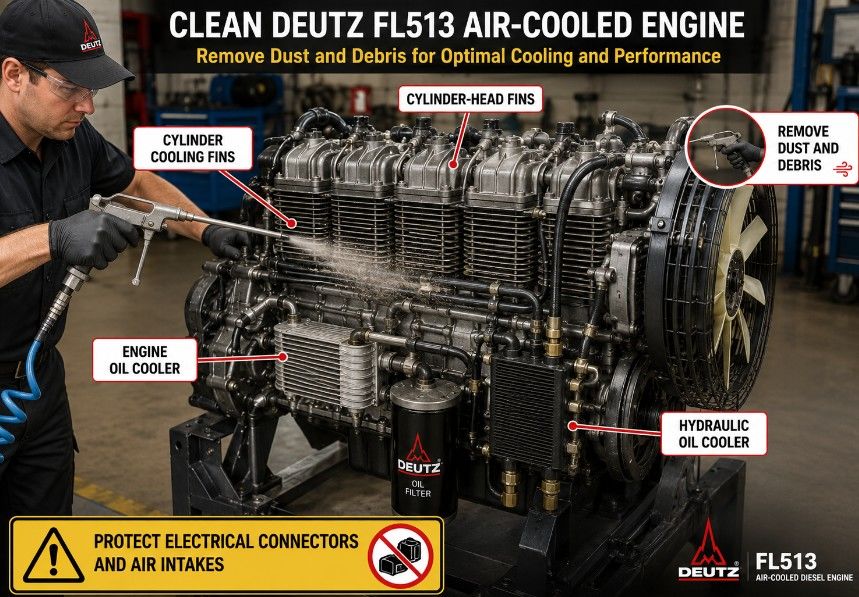
Begin the annual inspection with a complete visual examination of the engine.
Check for:
- Cracks or impact damage
- Loose components
- Oil leakage
- Fuel leakage
- Damaged cooling fins
- Missing fasteners
- Deteriorated hoses
- Damaged wiring
- Restricted cooling-air passages
- Abnormal vibration marks
The cylinder liners, cylinder-head cooling fins, engine oil cooler, and hydraulic oil cooler passages should be cleaned with compressed air.
Where appropriate, high-pressure alkaline cleaning water may also be used. However, water must not be directed into electrical connectors, the air intake, fuel-system openings, or other sensitive components.
After washing, start the engine and allow it to run for several minutes. This helps evaporate moisture from the cylinder liners, cooling fins, and other exterior surfaces, reducing the risk of corrosion.
2. Inspect and Test the Fuel Injectors
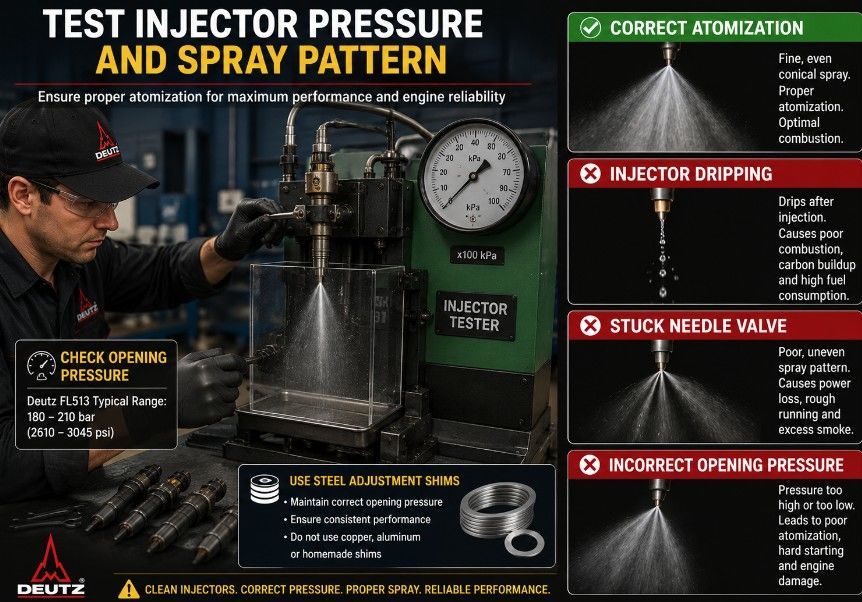
Fuel injector condition directly affects combustion quality, engine power, fuel consumption, exhaust smoke, and piston temperature.
Injectors operate continuously under high pressure and high temperature. Over time, they may develop:
- Poor fuel atomization
- Injector nozzle dripping
- Sticking needle valves
- Incorrect opening pressure
- Uneven fuel delivery
- Excessive carbon deposits
A defective injector can cause incomplete combustion and increased carbon buildup inside the cylinder. If the condition is not corrected, it may contribute to piston-ring seizure, piston crown damage, high exhaust temperature, cylinder wear, or serious engine failure.
All injectors should be removed and tested by a qualified diesel technician using suitable injector-testing equipment.
Injectors should be repaired or replaced when they show:
- Poor spray pattern
- Fuel dripping after injection.
- A sticking nozzle needle
- Incorrect opening pressure
- External leakage
- Excessive wear
After repair or replacement, verify the opening pressure and spray pattern of every injector.
Injector Pressure Adjustment Requirements
The following points are especially important:
- Injector pressure must be consistent between cylinders.
All injectors installed in the same engine should have closely matched opening pressures. - Use steel adjustment shims only.
Do not use copper, aluminum, or homemade shims cut from beverage cans or other unsuitable materials. - Do not interchange injectors between incompatible engine models.
Injector nozzles and complete injector assemblies must match the engine application. Some injector-body components may be interchangeable only when the correct injection pressure and specifications can be achieved.
Incorrect injector adjustment can cause rough operation, difficult starting, excessive smoke, high combustion temperature, and uneven cylinder loading.
3. Replace the Engine Oil and Three Main Filters
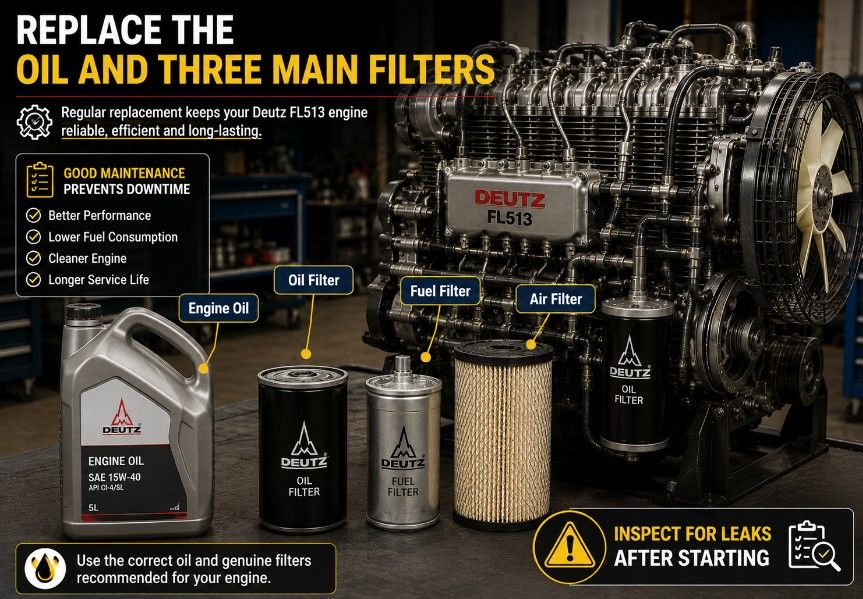
During the annual inspection, replace the following items regardless of how recently they were serviced:
- Engine oil
- Engine oil filter
- Fuel filter
- Air-filter element
The term “three filters” generally refers to the oil filter, fuel filter, and air filter.
The following components and systems should also be cleaned as required:
- Engine oil passages
- Oil pan
- Fan centrifugal filter
- Air-filter housing
- Fuel tank
- Fuel lines
Use engine oil with the correct viscosity and performance classification for the engine model, operating temperature, and application.
Before installing new filters:
- Clean the sealing surfaces.
- Confirm that old gaskets have been removed.
- Lubricate new filter seals where required
- Tighten filters according to the manufacturer’s instructions.
- Prime the fuel system if necessary
- Check for leakage after starting the engine.
4. Check and Adjust Valve Clearance
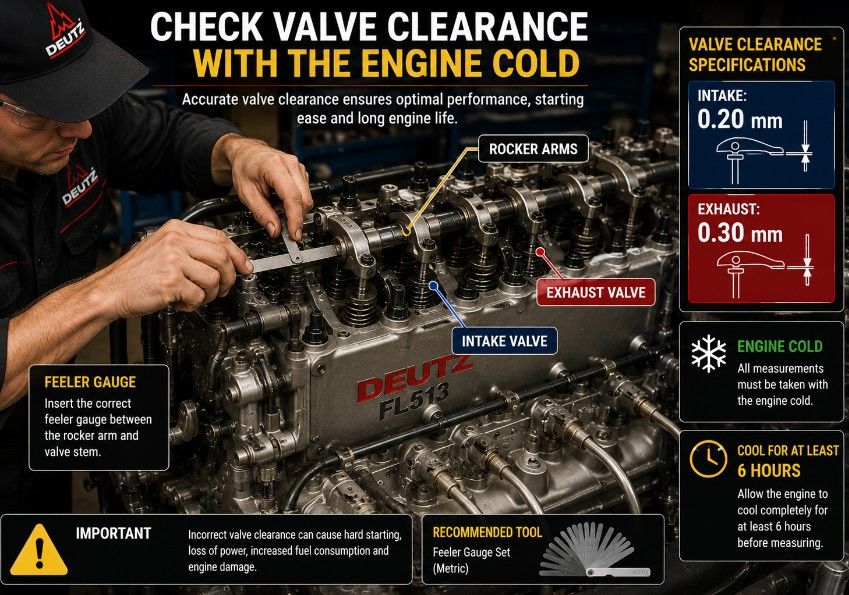
Valve clearance affects compression, combustion, valve timing, engine temperature, and starting performance.
Even when the engine has not reached the specified operating-hour interval, valve clearance should be inspected at least once a year.
The engine must be completely cold before adjustment. Allow it to remain stopped for at least six hours before measuring the clearance.
For a fully cooled Deutz FL513 series air-cooled diesel engine, the commonly specified valve clearances are:
| Valve | Cold Clearance |
| Intake valve | 0.20 mm |
| Exhaust valve | 0.30 mm |
Valve-clearance inspection and adjustment should be carried out by a trained mechanic using the correct engine-positioning procedure.
Incorrect valve clearance may cause:
- Difficult starting
- Low compression
- Reduced engine power
- Valve noise
- Valve overheating
- Burned valves
- Poor combustion
- Excessive exhaust smoke
Confirm these values against the workshop documentation for the exact FL513 variant before adjustment.
5. Inspect and Clean the Turbocharger
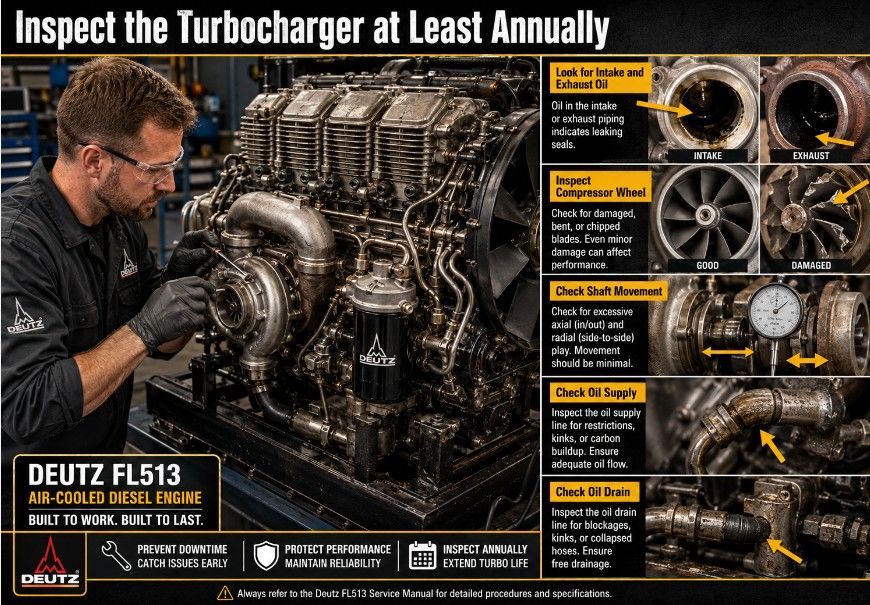
Turbocharged versions of the Deutz FL513 operate under high exhaust temperature and high rotational speed. The turbocharger should therefore be inspected at least once every year.
Common turbocharger problems include:
- Compressor or turbine wheel damage
- Excessive shaft movement
- Bearing wear
- Oil leakage into the intake system
- Oil leakage into the exhaust system
- Restricted oil supply or drain lines
- Carbon buildup
- Damaged compressor hoses
- Air leaks
Turbocharger faults can result in:
- Reduced engine power
- Slow acceleration
- Excessive black smoke
- Blue exhaust smoke
- Increased oil consumption
- Abnormal turbocharger noise
- High exhaust temperature
Depending on the inspection results, it may be necessary to replace the floating bearings, seals, or complete turbocharger assembly.
Turbocharger disassembly and repair should be completed only by qualified personnel. Incorrect assembly or balancing can cause rapid failure and possible engine damage.
6. Inspect and Calibrate the Fuel Injection Pump
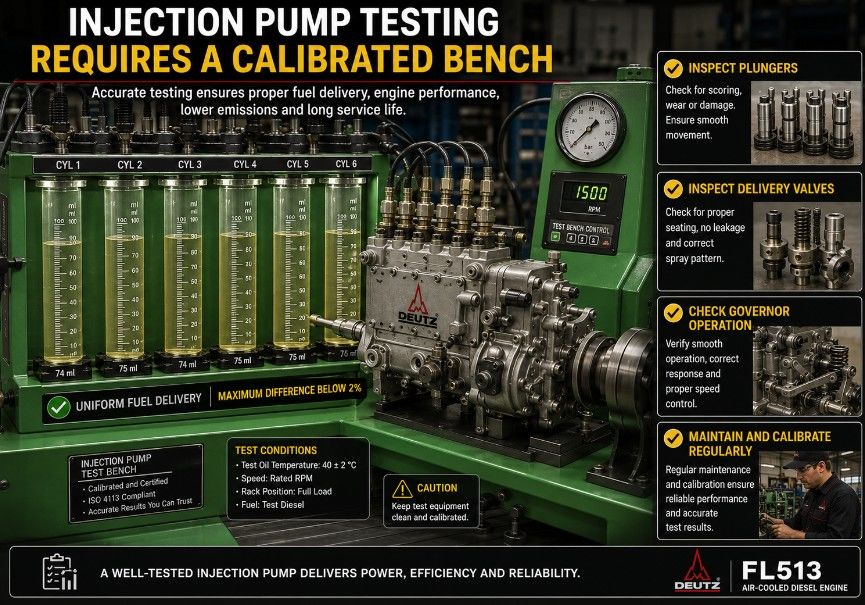
The fuel injection pump should be inspected and adjusted by a diesel fuel-system specialist using a calibrated injection-pump test bench.
During inspection, check the plungers, delivery valves, seals, governor, fuel-transfer components, and fuel-delivery balance.
Replace components when there is:
- Fuel leakage
- Surface scoring
- Severe wear
- Sticking movement
- Uneven fuel delivery
- Failure to maintain pressure
Fuel delivery to each cylinder should be uniform. The difference between cylinders should generally remain below 2%.
Important Injection-Pump Checks
Replace Matched Components When Necessary
When replacing a worn plunger, inspect the corresponding delivery valve carefully. Replacing both as a matched service set may be advisable depending on component condition and manufacturer instructions.
Engine Will Not Start After Long-Term Storage
When an engine has remained unused for an extended period and will not start, inspect the fuel injection pump control rack. Corrosion, contamination, or dried fuel deposits may cause it to stick.
Engine Sounds Normal but Has Low Power
When exhaust smoke and engine sound appear normal, but power is insufficient, inspect:
- Fuel-transfer pump
- Fuel supply restriction
- Return overflow valve
- Fuel-filter condition
- Fuel-tank ventilation
- Injection-pump delivery volume
Engine Speed Is Unstable
When engine speed fluctuates, inspect the governor for sticking or internal wear. Also verify that the governor housing contains the correct quantity and type of lubricant where applicable.
7. Check the Upper Engine for Fuel, Oil, and Air Leaks
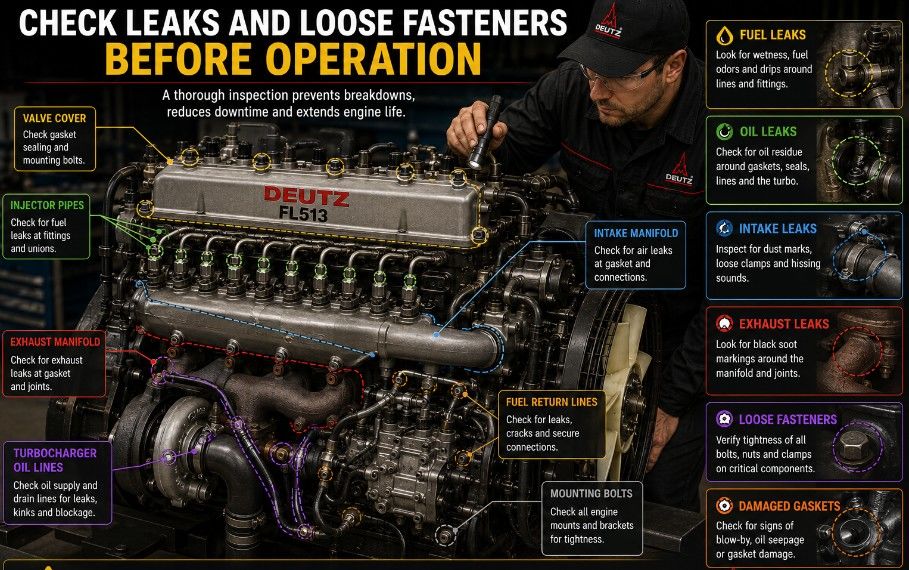
Inspect the upper section of the engine carefully for leakage.
Pay particular attention to:
- Valve-cover gasket
- Intake-manifold gaskets
- Exhaust-manifold gaskets
- Cylinder-head fuel return lines
- Pushrod protective tubes
- Injector pipe connections
- Fuel injection pump connections
- Flame-start heater plug
- Flame-start solenoid valve
- Turbocharger oil lines
- Intake hoses and clamps
Replace damaged seals, gaskets, hoses, or fittings as required.
Small leaks should not be ignored. Fuel leakage presents a fire risk, while intake leakage can introduce unfiltered air or reduce turbocharger boost pressure.
8. Inspect and Maintain the Fan System
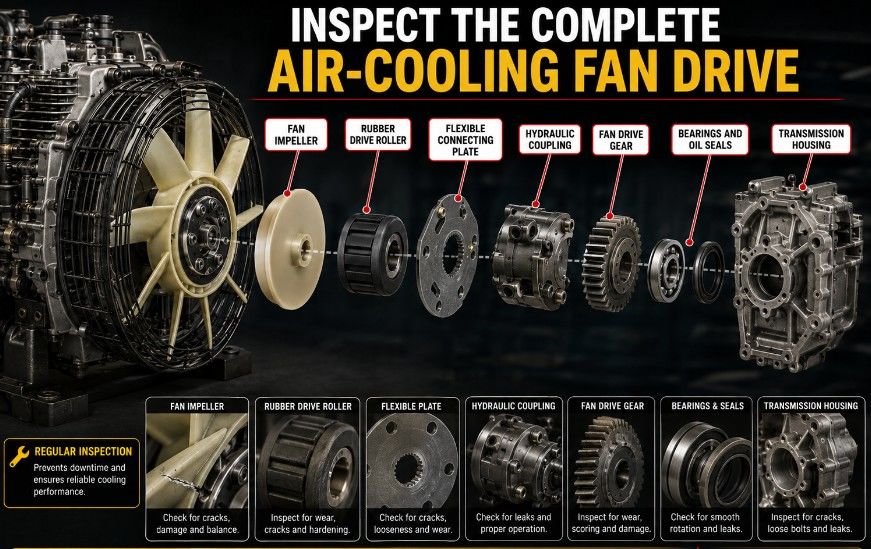
The air-cooling fan system is critical to the reliability of the Deutz FL513. Restricted airflow or damaged fan components can quickly cause excessive engine temperature.
Inspect the Fan Assembly
Check the fan for:
- Contact between moving and stationary components
- Missing fan-blade sections
- Cracked or damaged impellers
- Damaged stationary guide components
- Loose fasteners
- Abnormal movement
- Unusual operating noise
Check the Fan Drive Components
Inspect:
- Fan-drive rubber roller
- Fan-shaft flexible connecting plate
- Drive coupling
- Bearings
- Oil seals
- Fan transmission box
Replace any cracked, hardened, deformed, or damaged parts.
Clean the Hydraulic Fan Coupling
Contamination inside the hydraulic coupling may reduce fan-drive performance. Clean and inspect the coupling according to the workshop procedure.
Inspect the Exhaust Thermostat
Inspect and clean the exhaust thermostat. Confirm that it moves correctly and is not blocked by carbon deposits.
Inspect the Fan Drive Gear
Carefully inspect the fan-drive gear, sometimes referred to by technicians as the “grenade gear,” together with its shaft bearings and oil seals.
Check for:
- Gear wear
- Shaft movement
- Bearing noise
- Oil leakage
- Seal damage
- Loose mounting components
Also inspect the fan transmission housing for structural damage and sealing problems.
9. Check Engine Fasteners and Pipe Connections
Engine vibration and repeated heating cycles can gradually loosen bolts, nuts, brackets, and pipe fittings.
Check the tightness of:
- Exhaust manifold fasteners
- Intake manifold fasteners
- Fuel pipe connections
- Oil pipe connections
- Engine mounting bolts
- Fan-system fasteners
- Turbocharger mounting hardware
- Injection-pump mounting bolts
- Accessory brackets
Replace missing or damaged hardware. Do not substitute bolts with an incorrect strength grade, length, or thread specification.
For a new engine or an engine recently returned to service after a major overhaul, retighten the exhaust-pipe or exhaust-manifold nuts after approximately 10 to 20 operating hours, following the specified torque sequence.
10. Inspect the Fuel Injection Pump Coupling
The injection-pump coupling transfers engine rotation to the fuel injection pump. Any damage or looseness can affect injection timing and engine operation.
FL413F Models
Inspect the elastic connecting plates carefully. Replace the plates or complete coupling assembly if there is:
- Cracking
- Deformation
- Delamination
- Loose fasteners
- Excessive wear
FL513 Series Models
Although FL513 engines may use a rigid coupling arrangement, the associated flexible or elastic connecting components must still be inspected.
Replace any component that is cracked, damaged, loose, or distorted.
A damaged injection-pump coupling can alter timing, create abnormal vibration, and eventually cause loss of drive to the pump.
11. Check the Fuel Injection Advance Angle
Inspect the injection advance angle when the engine develops symptoms such as:
- Difficult starting
- Excessive black smoke
- Low power
- Abnormal diesel knock
- High fuel consumption
- High exhaust temperature
- Rough operation
Incorrect injection timing can significantly affect combustion efficiency and engine temperature.
This procedure requires the correct timing tools, engine-positioning method, and model-specific specifications. It should be completed by a technician familiar with Deutz mechanical fuel systems.
12. Measure Cylinder Compression Pressure
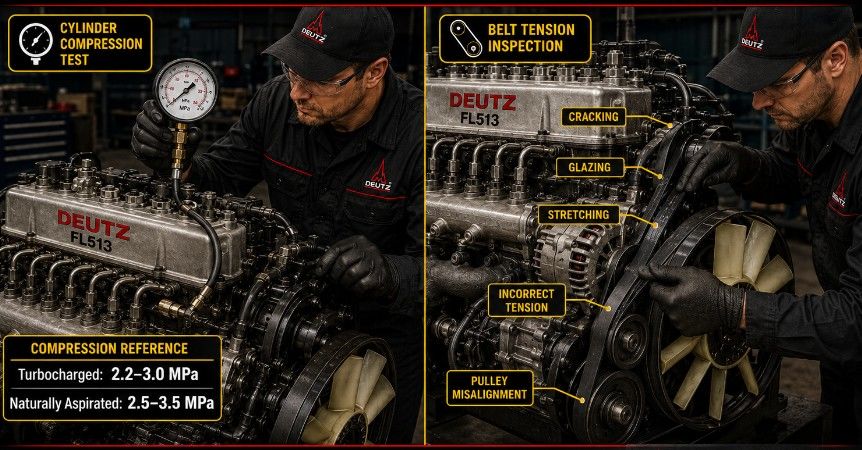
Cylinder compression testing can help identify worn piston rings, leaking valves, cylinder wear, head-gasket problems, or other internal engine faults.
The commonly referenced pressure ranges are:
| Engine Type | Compression Pressure |
| Turbocharged FL513 | 2.2–3.0 MPa |
| Naturally aspirated FL513 | 2.5–3.5 MPa |
In addition to the absolute pressure, compare the readings between cylinders. A significant difference may indicate a mechanical problem even when individual readings remain within a general reference range.
Compression results can be affected by:
- Cranking speed
- Battery condition
- Engine temperature
- Test-gauge accuracy
- Valve clearance
- Test procedure
- Altitude
Always follow the official test method for the exact engine model.
13. Inspect the Air Compressor
Where the engine drives an air compressor, inspect it for:
- Low air-delivery output
- Excessive oil carryover
- Abnormal noise
- Air leakage
- Worn piston rings
- Cylinder wear
- Damaged valves
- Loose mounting hardware
Replace the compressor piston rings or complete air-compressor assembly when wear exceeds the service limit.
14. Inspect the Crankcase Breather
A restricted crankcase breather can increase crankcase pressure and force oil through seals, gaskets, the turbocharger drain, or other engine openings.
Inspect and clean:
- Breather housing
- Breather pipe
- Breather diaphragm
- Internal filter or separator
- Hose connections
Replace a hardened, cracked, or damaged breather diaphragm.
Signs of a crankcase ventilation problem may include:
- Oil leakage
- Dipstick movement
- Excessive crankcase fumes
- Oil around seals
- Increased oil consumption
15. Check Belt Condition and Tension
Inspect the generator belt and any externally driven fan belt.
Check for:
- Cracks
- Glazing
- Frayed edges
- Oil contamination
- Stretching
- Missing belt sections
- Incorrect tension
- Pulley misalignment
Adjust the belt tension according to the manufacturer’s specification. Replace stretched or damaged belts rather than attempting to compensate with excessive tension.
Excessive belt tension can damage bearings, while insufficient tension can cause slipping, poor charging, overheating, and premature belt failure.
16. Inspect the Hydraulic Oil Cooler Vibration Mounts
Inspect the rubber vibration-damping bolts or mounts between the engine cylinder-head area and the hydraulic oil cooler.
Replace the mounts when they are:
- Cracked
- Hardened
- Deformed
- Loose
- Oil-soaked
- Separated from their metal sections
Damaged vibration mounts may increase vibration and place additional stress on the cooler, brackets, hoses, and nearby engine components.
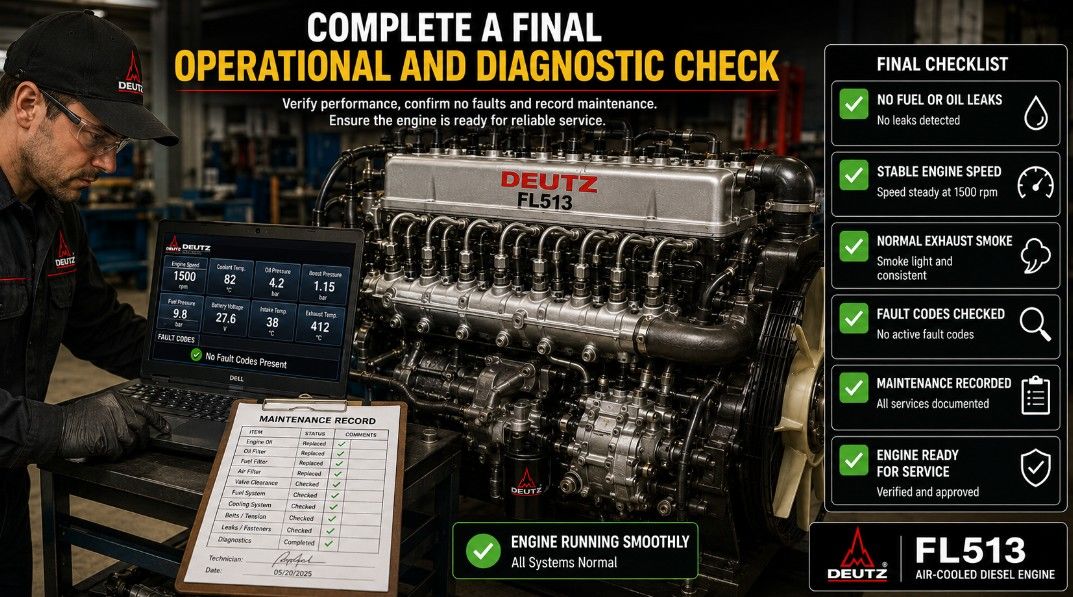
Recommended Annual Deutz FL513 Maintenance Checklist
During the yearly comprehensive service, technicians should normally complete the following checks:
- Inspect the exterior of the engine.
- Clean the air-cooling fins and cooler passages.
- Replace the engine oil.
- Replace the oil filter.
- Replace the fuel filter.
- Replace or service the air filter.
- Clean the fuel tank and fuel lines when required.
- Test and adjust all fuel injectors
- Check valve clearance
- Inspect the turbocharger
- Test the fuel injection pump.
- Check for fuel, oil, exhaust, and intake leaks.
- Inspect the fan and fan-drive system.
- Check the injection-pump coupling.
- Inspect engine fasteners
- Check injection timing when symptoms are present.
- Measure cylinder compression when required
- Inspect the air compressor.
- Service the crankcase breather.
- Inspect belts and pulleys.
- Check vibration-damping mounts
- Perform a diagnostic scan when an electronic controller is installed.
- Record all measurements, replaced parts, and inspection results.
Maintenance Safety Precautions
Before servicing a Deutz FL513 engine:
- Park the machine on stable, level ground.
- Stop the engine and remove the starting key.
- Allow hot engine components to cool.
- Disconnect the battery when required.
- Prevent accidental engine starting.
- Clean the work area before opening the fuel system.
- Wear eye protection when using compressed air.
- Do not place hands near rotating fan or belt components.
- Use suitable lifting equipment for heavy parts.
- Dispose of engine oil, filters, fuel, and cleaning fluids responsibly.
High-pressure diesel fuel can penetrate the skin and cause severe injury. Never check injector or high-pressure pipe leakage with your hand.
Frequently Asked Questions
How often should a Deutz FL513 engine receive a comprehensive inspection?
A complete preventive inspection should be performed at least once per year. Engines operating in dusty, high-load, high-temperature, or continuous-duty conditions may require more frequent servicing.
What is the valve clearance for a Deutz FL513 engine?
For a completely cold engine, the commonly referenced clearance is 0.20 mm for the intake valve and 0.30 mm for the exhaust valve. Confirm the specification for the exact engine model and serial number before making any adjustments.
What can cause a Deutz FL513 engine to produce black smoke?
Possible causes include restricted intake airflow, defective injectors, incorrect injection timing, excessive fuel delivery, low compression, turbocharger problems, or heavy engine loading.
Why is injector testing important?
Poor injector atomization or fuel dripping can cause incomplete combustion, carbon buildup, high piston temperature, excessive smoke, low power, and severe internal engine damage.
Can Deutz diagnostic software replace mechanical testing?
No. Deutz SerDia and DECOM equipment can read faults and operating data on supported controllers, but mechanical checks such as valve-clearance measurement, injector testing, compression testing, leak inspection, and turbocharger examination must still be completed manually.
Why should cooling fins be cleaned regularly?
The FL513 is an air-cooled engine. Dirt, oil, dust, and debris on the cylinder and cylinder-head cooling fins restrict heat transfer and can cause excessive engine temperature.
What should be checked when a Deutz FL513 is difficult to start?
Inspect the battery and cranking speed, fuel supply, injector condition, injection timing, valve clearance, cylinder compression, fuel injection pump control rack, and cold-start assistance system.
Final Recommendations
Consistent preventive maintenance is one of the most effective ways to extend the working life of a Deutz FL513 series diesel engine.
Particular attention should be given to the air-cooling system, injectors, engine oil, filters, valve clearance, turbocharger, injection pump, fan drive, and fuel injection timing.
Maintenance should be documented carefully, including:
- Engine operating hours
- Date of service
- Oil and filter specifications
- Valve-clearance measurements
- Injector opening pressures
- Compression readings
- Diagnostic trouble codes
- Parts replaced
- Technician observations
When electronic troubleshooting is required, a compatible Deutz DECOM diagnostic interface and Deutz SerDia software can help technicians communicate with supported engine controllers, read fault codes, monitor parameters, and verify repairs.
For accurate tool selection, confirm the engine model, controller type, equipment application, diagnostic connector, and required functions before ordering Deutz diagnostic equipment.